
Want to Get Faster? Learn How to Stop.
We caught up with Charlie Bando of Bando Performance to talk about training smarter, moving better, and why speed is only half the equation.
Every athlete wants to get faster. Whether it's beating a defender, winning a race to a loose puck, or creating that extra step when it matters most, speed can change a game.
But according to Charlie Bando, there's something just as important that athletes often overlook.
Their brakes.
Charlie is the owner of Bando Performance, where he helps athletes develop the strength, speed, and movement skills to compete at a higher level. When we sat down with him to talk training, he shared a pretty good analogy.
"I want every single kid that trains with us, every athlete that trains with us to think of themselves as a Lamborghini," Charlie told us.
His point? All that horsepower doesn't mean much if you can't control it.
Think about the best players in hockey or lacrosse. It's not always their straight-line speed that separates them. It's their ability to stop, change direction, and accelerate before a defender can react.
Speed matters. Control makes it effective.
Train for the game you play.
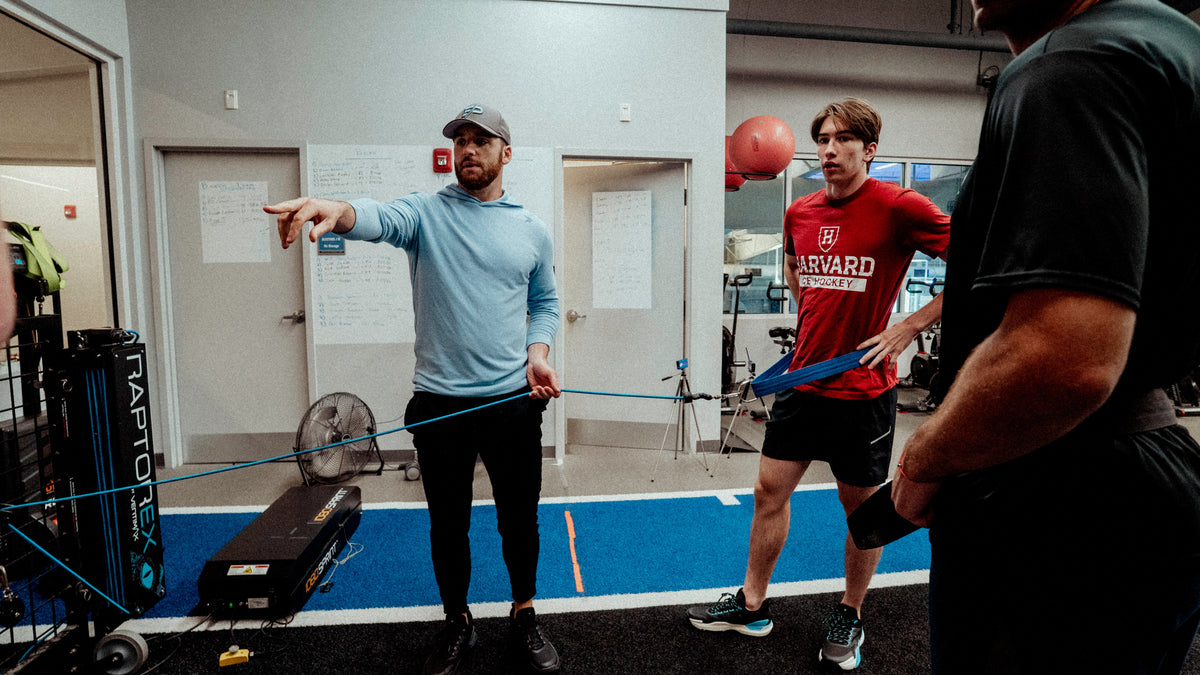
At Bando Performance, training goes beyond sprinting and lifting weights. Athletes work on accelerating, decelerating, absorbing force, and moving efficiently in every direction.
"We find it really, really important to kind of stress the human body in terms of the biomechanics and all three different planes of motion," Charlie explained. "That's what sports are played in."
In other words, athletes need to train the way they actually move in competition. Cutting, pivoting, changing speeds, and reacting under pressure are all part of the game.
Charlie also emphasizes building strong movement fundamentals early. Learning to squat, hinge, push, pull, and control your body on one leg or two creates the foundation for developing speed and power as athletes progress.
It's not always the most exciting part of training, but it's essential to getting better.
The right gear makes a difference.
We also talked footwear, something we're particularly interested in.
Charlie believes athletes need to feel connected to the ground while having enough stability to move aggressively in multiple directions.
"When you think about change of direction, when you think about applying force in three dimensions, you want to make sure that the shoe is stable enough to provide support," he explained.
When Charlie examined our Snapback Trainer, he immediately noticed its structure and support during changes of direction. It's the kind of movement we designed the shoe to handle.
What stood out most from our conversation was how Charlie approaches every aspect of training with the same goal: helping athletes perform better in their sport.
Because the ultimate measure of a workout isn't how much weight you lifted or how fast you ran in a straight line. It's whether that work makes you a better athlete when the game is on the line.
And sometimes, getting faster starts with learning how to stop.